
By Ronith Urs
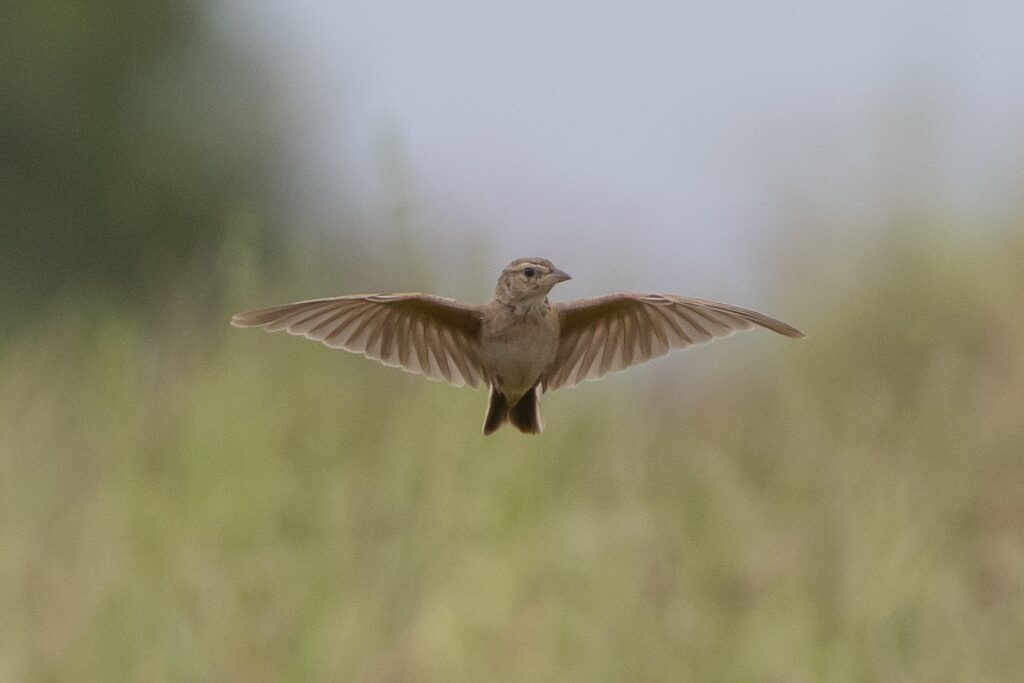
With the information on bird migration that we’ve accumulated over the years, very few ‘unsolved’ mysteries around their seasonal movement still exist - and none as big in India as the Singing Bushlark (Mirafra javanica). The Western India population breeds in considerable numbers & seemingly disappears from the landscape during winter. One of the leading theories suggests that they’re still around but notoriously difficult to spot in the nonbreeding period due to their secretive behaviour, although local birders swear that they’ve looked extensively without definitive proof that they’re still around in comparable numbers or at all. So, where could a population this large disappear to?
With the information on bird migration that we’ve accumulated over the years, very few ‘unsolved’ mysteries around their seasonal movement still exist - and none as big in India as the Singing Bushlark (Mirafra javanica). The Western India population breeds in considerable numbers & seemingly disappears from the landscape during winter. One of the leading theories suggests that they’re still around but notoriously difficult to spot in the nonbreeding period due to their secretive behaviour, although local birders swear that they’ve looked extensively without definitive proof that they’re still around in comparable numbers or at all. So, where could a population this large disappear to?
I recently discovered a clue while working on the eBird status and trends animation maps that might add very important context to this mystery (see video). The yearly animation map shows most of the populations of this species (including the ones in Africa, Southeast Asia, and small parts of South India) remain very static year-round, with two notable exceptions - the population in western India disappears entirely outside of its breeding season between May & September, and the population in Australia seems to show a subtle range expansion and increases in abundance perfectly in sync with the disappearing birds in Western India. Coincidence?
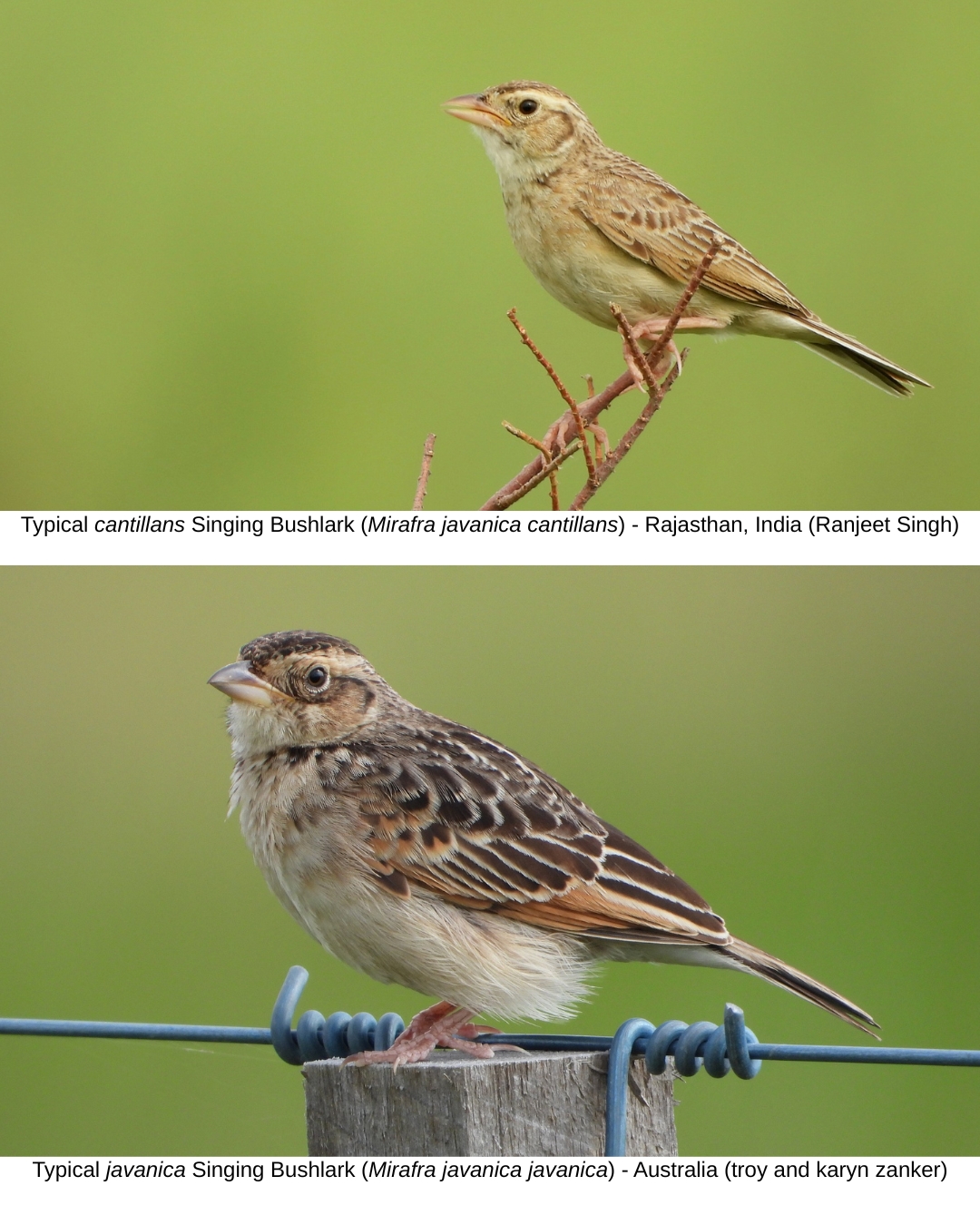
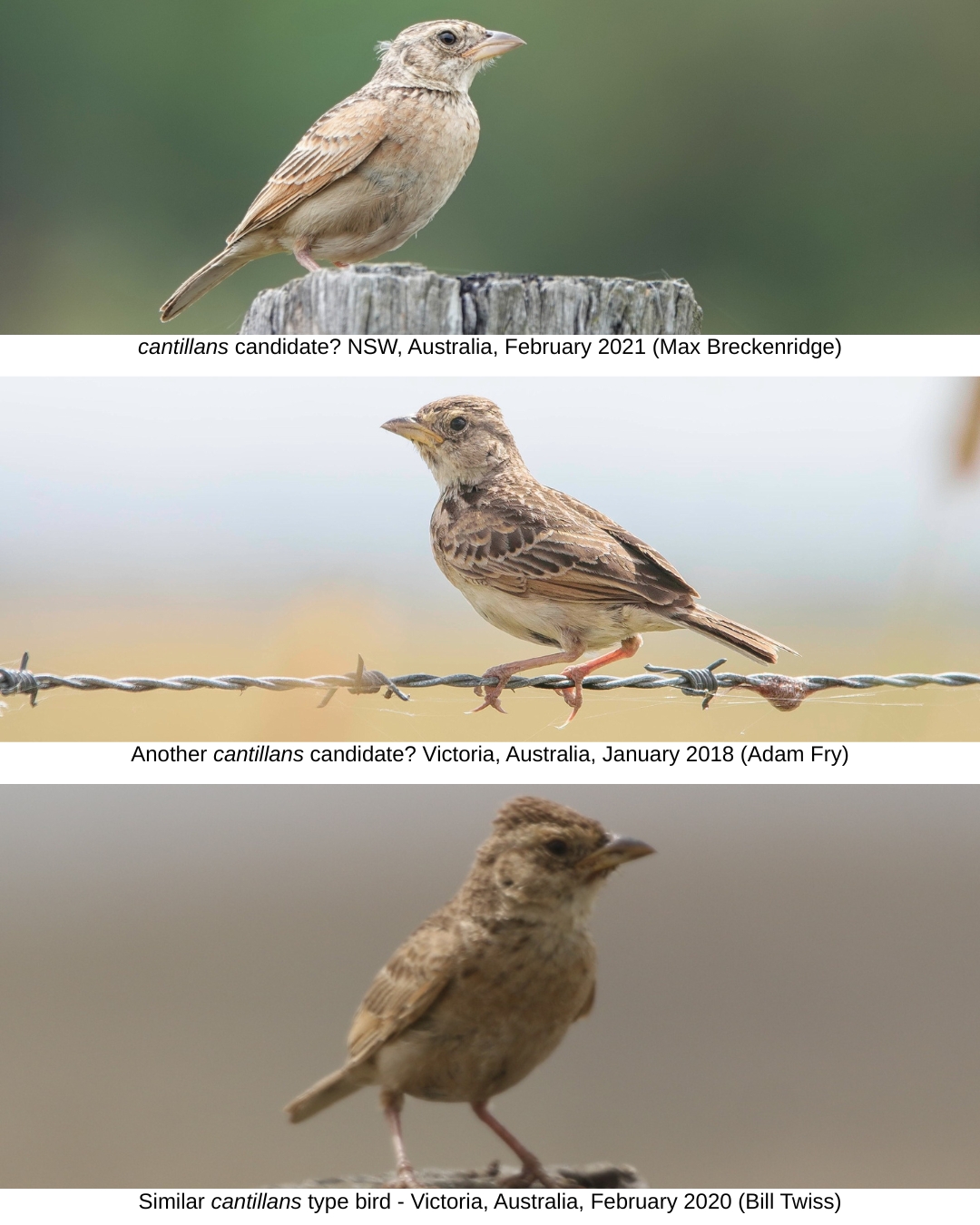
I’ve been very curious about this pattern and started digging deeper - since the resident javanica birds in Australia are darker and more well-marked, the cantillans birds that breed in Western India shouldn’t be impossibly hard to pick out in photos (Image 1). Fortunately, Australia has a dearth of images of Singing Bushlarks throughout the year, so I went through all the images submitted to the Macaulay Library between November and March (note that since Australia is in the Southern Hemisphere, the period between November and March is when their resident javanica birds breed in summer). And sure enough, a few very light, relatively weakly-marked cantillans-type birds seemed to be around Australia in winter (Image 2). I also looked at ML images from Australia between July and September (which should be the peak of the breeding season in Western India), and could not find a single cantillans-type bird in Australia.
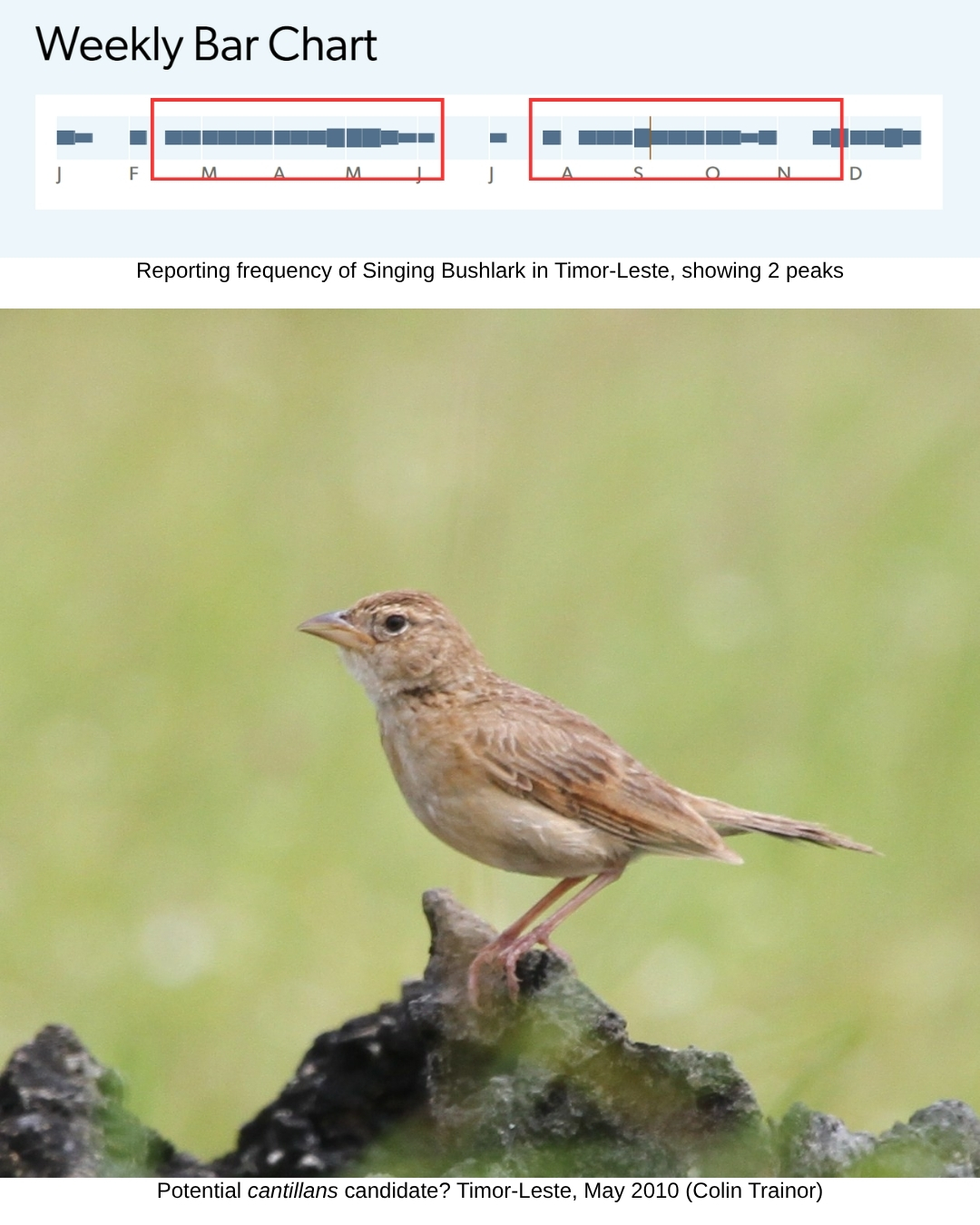
If Western India’s Singing Bushlarks are indeed migrating to Australia, surely there must be signs on the smaller Southeast Asian islands during passage? Timor-Leste seemed like a good case study. The bar charts (Image 3) indicate two windows where reporting frequency peaks, which could be a sign of passage through the region. Timor-Leste also has the resident javanica subspecies, so the patterns are slightly harder to discern from bar charts. I also noticed photos of the same lighter, unmarked cantillans-type birds on the island during May, which would coincide with the period when they should be expected to move through the region, if they are indeed migrating to Australia (Image 3).
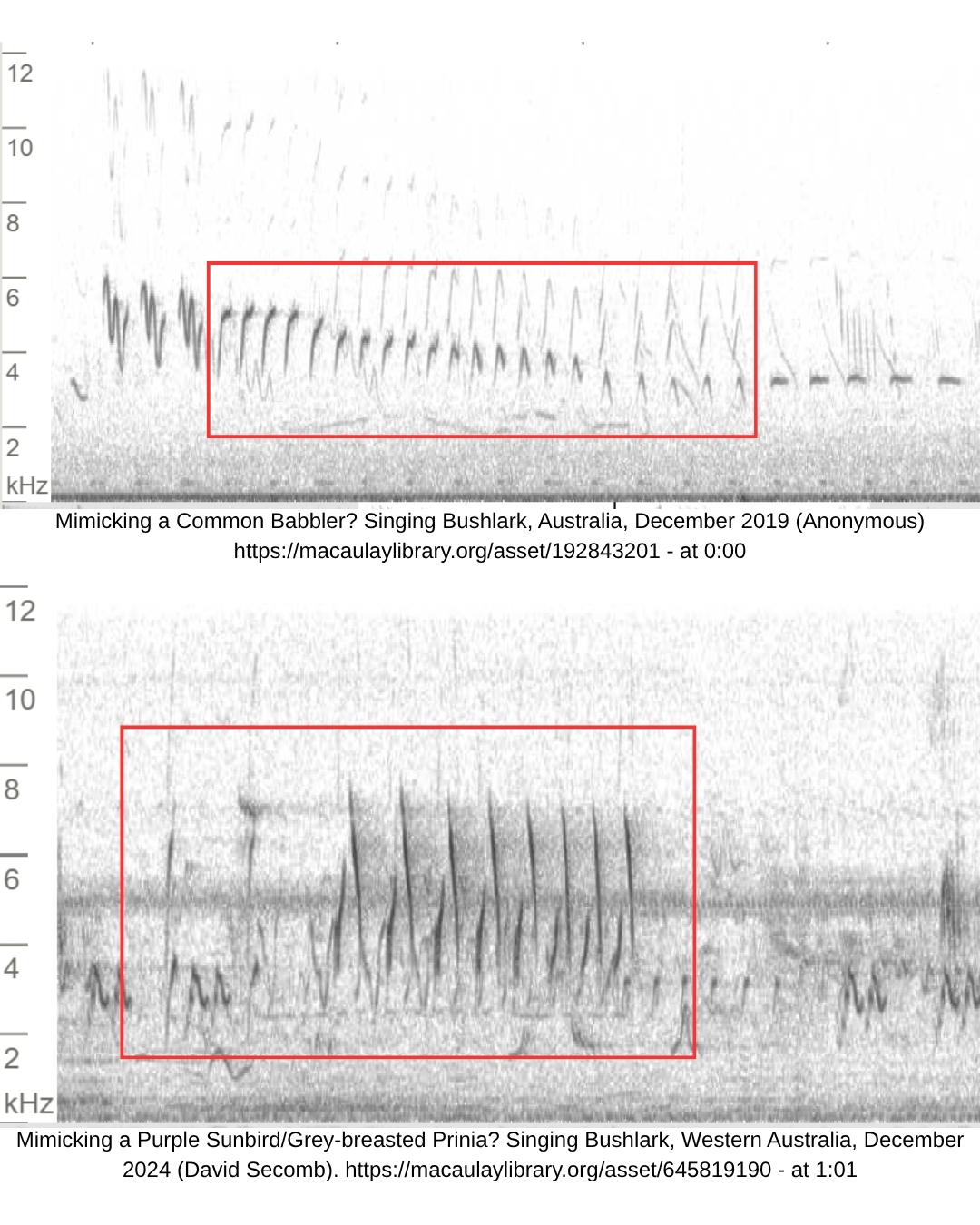
Lastly, since we all know the Singing Bushlark has an incredible vocal repertoire, I looked at all the Australian recordings for clues and patterns that can help piece this together (Image 4). This was especially challenging since there was no way to tell if the recordings were from javanica birds or the lighter cantillans suspects, but there were still promising clues. One of the winter recordings had a sequence with a call that sounded almost exactly like a Common Babbler (Argya caudata) - repeats twice at 0:00. How does a Singing Bushlark in Australia have an almost perfect Common Babbler vocalization in its song, a bird endemic to the Indian Subcontinent? Was it pure chance? Is there a bird in Australia that sounds similar? I found a few others that sound a lot like the Asian Green Bee-eater and Purple Sunbird, but I’m not as sure.
Would love to rope in some Australian birders for their input, so we can piece this together! Again, most of this is pure speculation backed by some supporting patterns, and I’m hoping we’ll eventually tag some of these birds to see where they’re going.
Happy Birding!